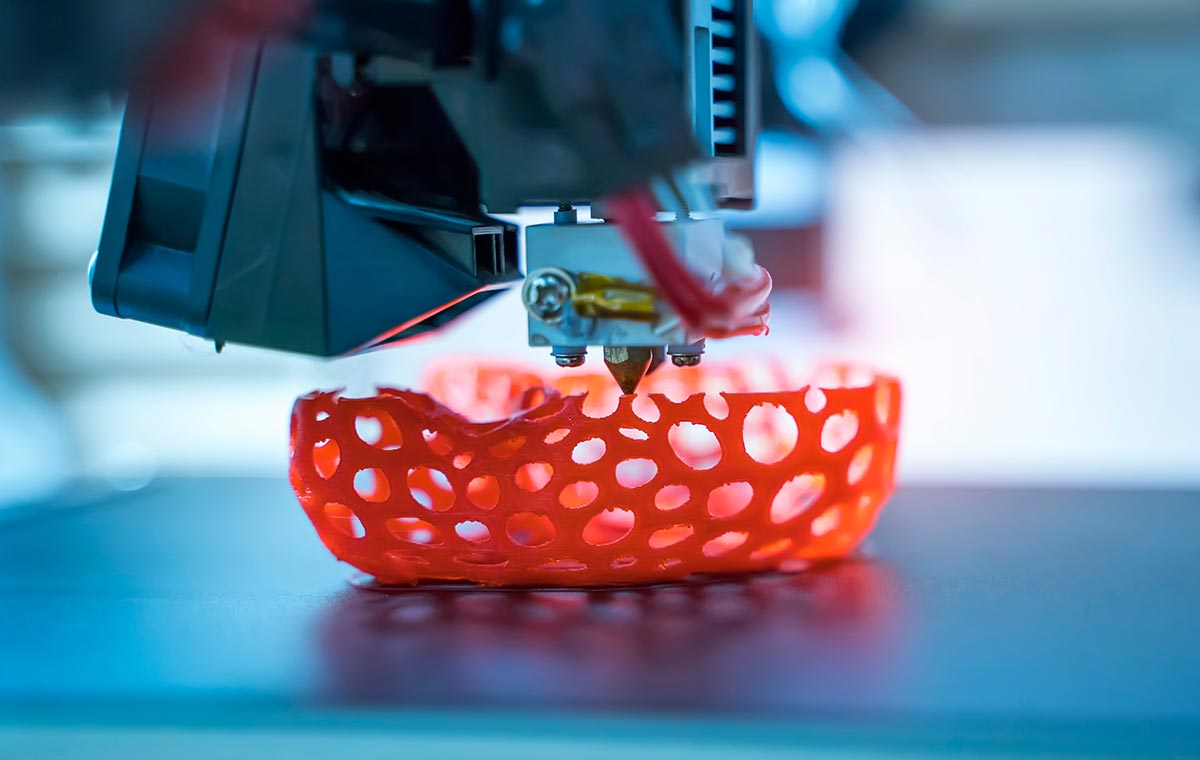
At THE EXPLORATORY MINDS PROJECT not only will we cover health where and when we can advise and research for better nutrition to help maintain health,but we are looking into science and tech that is going to change how our health is maintained. And 3D printing certainly gave mankind a huge head start in medical support, this support came in both directly as a result of the technologies and indirectly.
Bioprinting is a rapidly advancing field of technology that combines the principles of 3D printing with the field of biology. The goal of bioprinting is to create functional, living tissue using a 3D print technology. This technology has the potential to revolutionize the field of medicine, as it could be used to create replacement organs and tissues for patients in dire need of transplants.
There are several different methods of bioprinting that are currently being developed. One of the most common methods is called “extrusion-based bioprinting.” This method involves using a 3D printing process to deposit layers of living cells and a supportive material, known as a “bioink,” onto a surface. The cells are then able to grow and form functional tissue.
Another method of this technology is called “stereolithography-based bioprinting.” This method involves using a laser technology to solidify a liquid bioink, which contains living cells, into a specific shape. This process is similar to the way traditional 3D printing works, but with the added step of using living cells. As always any given technology has progressed in acuracy over time. I really think that if we are vigilant at maintaining the acuracy and standards and not get complacent then the future of medical support will become seemingly limitless.
What we mean by this is that if you think of the resolution of pixels per square inch increasing over time in digital technology for screen displays then the more pixels inside of that measurment then the more detail there is and the more infomation and complexity there is. The same happend with tech going from analog audio tapes to digital compact disc way back when we were with out un-social media networks, like facebook claiming to be social media, Take the typical analouge audio c15 casste popular in the 1980tes,the magnetic tape if digitsed held about 48 KILLOBYTES data, that being 24 per side, while the earliest CD’S held around 500 to 600 megabytes to put that into perspective 1024 kilobyes=1 megabyte. 3D printing’s evolution is absolutly no exception. The resuloution has increased so finely that we now have technology being developed that can manipulate biological matter on a microscopic scale of 1 cell at a time.
This Bioprinting has a big potential to be used in the field of cosmetic and reconstructive surgery. It can be used to create replacement skin, cartilage, and even bones. This technology could also be used to create models of a patient’s specific anatomy, which could be used to plan and practice surgical procedures before they are performed on a patient.
Despite all the promising potential there is still several challenges that need to be overcome before it can be widely used
in the medical field. While current progress equals a high likelyhood that we will see this tech become highly common place, its still a long way off yet. One of the biggest challenges is ensuring that the printed tissue is able to survive and function properly once it is implanted into a patient’s body. This is where other technologies in the medical industry may come in to additionally aid potential success , for instance research and science in the stem cells has also been quietly gaining more and more traction and support among medical experts, As with any paradigm shift in our technological prowess there are concerns on the wisdom of any technologys use for practical aplication to raise all ships peacfully.
The current problems surrounding bioprinting such as the potential for the technology to be used to create “designer” organs and tissues for the wealthy while poorer people miss out is one of the more obvious,espcially in america who dont have a socialised health care system, At the time of writing we still live in a paradigm where the rich get richer and poor get poorer. What I mean by desinger organs is not a totally new organ that nature didint allow via natral selection. Its more inline with a better heart, or better eyes,hell isnt it clear that we could all all do with a better brain somtimes. But then what of the true self and where does it reside?, The bottom line that what appears to dirve this kind of technolgoical evolution is our curiosity about reality and how we can change and have our interactions with reality change as well.,and part of that reality is how we percive our own bodies and how our bodies influence us consioulsy this spurs on such information overload that has outstriped our evolutionary biology. So then how a might a higher/faster rate of data transfer for a brain to function more efficiently manifest itself? thhis is indeed one subject of debate for sure.
In conclusion, bioprinting and 3d printing in general is as predicted by many a promising and potentially disruptive technology that has the potential to revolutionize the field of medicine. The ability to create functional, living tissue using a 3D printer could greatly benefit patients in need of transplants and improve the field of cosmetic and reconstructive surgery. While there are still challenges that need to be overcome, there is a massive potential of this technology makes it a field both worth further research for our knowledge to share and for those who are directly involved in its development to research learn and share. As i write these are hard times for many and yet they are also very facsinating times for our a overall potential future.